
Where LeFlore Juvenile Releases Go
A young person leaving LeFlore County Juvenile Detention Center may return to a parent or guardian under a juvenile-court direction, enter another authorized placement, or move to the custody of another responsible agency. The public research does not establish a standard release route or public release sheet for this facility. The court order and the facility or agency record control the individual outcome.
| Possible custody event | Lawful confirmation route |
|---|---|
| Return under court direction | Authorized parent or guardian, counsel, facility staff, and juvenile court. |
| Transfer to another placement | The responsible agency and receiving placement, subject to access rules. |
| Continued juvenile detention | The facility or court through an authorized inquiry. |
| Protected or sealed event | Counsel and the court, not an adult public-search workaround. |
Moving out of the Talihina building does not always mean that all state or court responsibility ended. A placement change can continue legal custody in a different setting. Describe the event only as the source record describes it, and do not infer a community release from absence on an adult site.
Confirm a LeFlore Juvenile Release
The proper sequence begins with authority to receive information. Oklahoma Title 10A and court orders govern juvenile confidentiality and access. The facility directory proves that the center exists. It does not turn an individual juvenile custody record into a public adult release record.
- Determine whether you are a parent, guardian, counsel, court representative, or authorized agency with a lawful role in the case.
- Call the LeFlore County Juvenile Detention Center at 918-567-3393 and ask for the proper authorized inquiry process.
- Be ready to verify identity and relationship through the method the facility or court requires.
- Use counsel or the juvenile court for the controlling order, placement decision, or access question.
- If staff identify another authorized placement or agency, follow that channel without publishing the youth's location.
- When access is denied or limited, ask counsel or the court about lawful review instead of using an adult database.
The main LeFlore County custody-source guide explains why adult county jail, ODOC, federal, and juvenile records must remain separate. For this facility, no-result pages in those adult systems are not evidence.
LeFlore Juvenile Records and Contact
The Oklahoma Office of Juvenile System Oversight directory identifies the LeFlore County Juvenile Detention Center in Talihina and supplies the facility phone. It does not publish a street address or public operating hours in the reviewed research, so neither should be guessed.
LeFlore County Juvenile Detention Center
Talihina, Oklahoma
918-567-3393
Street address and public hours are not published in the research.
Authorized records route
Facility staff, juvenile court, counsel, parent or guardian, or responsible agency.
Access depends on legal authority and the governing court order.
The official Oklahoma juvenile facilities directory is the source for the center's Talihina listing.
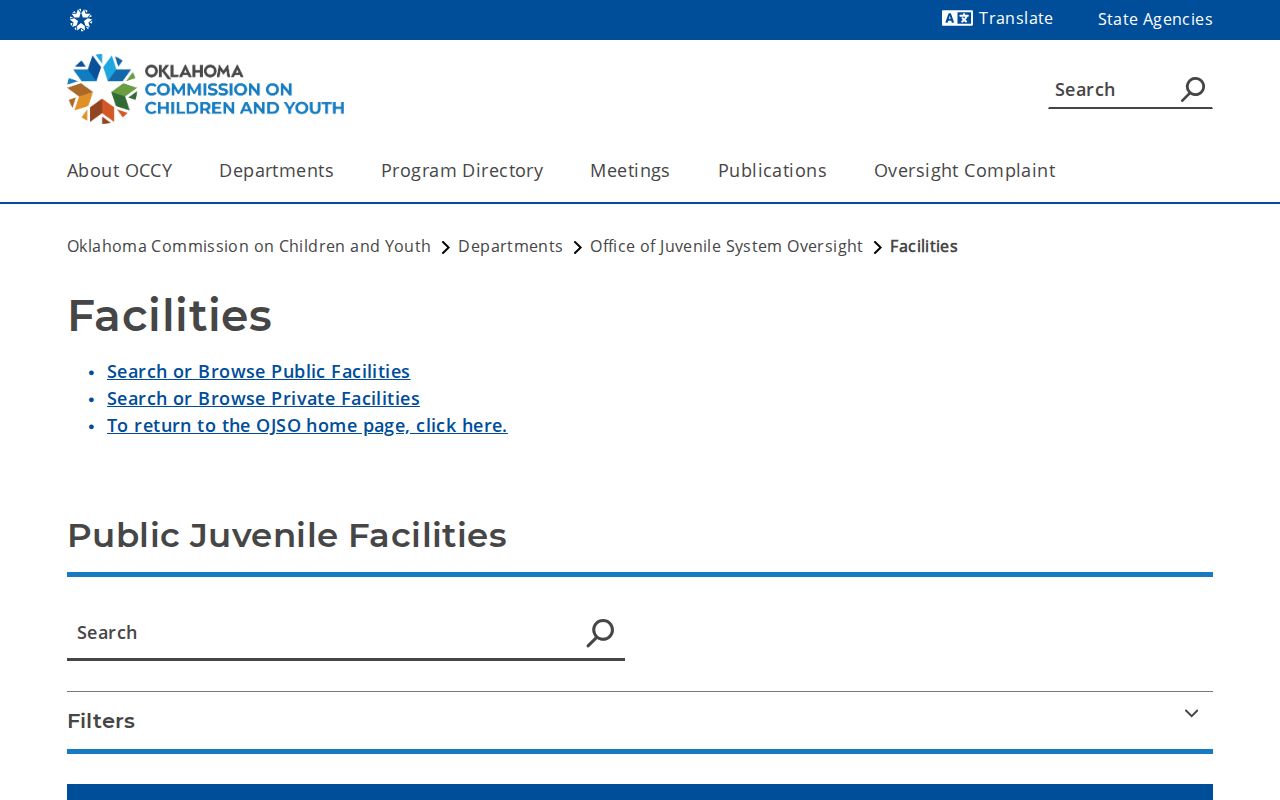
The captured directory supports the facility identity, location, phone, age range, and mixed-gender designation, but it does not expose any youth's record.
LeFlore Juvenile Record Boundaries
Juvenile records require separate analysis under Title 10A. Court orders can also set who may see a case file, custody detail, or placement information. Sealed, medical, victim, education, safety, and other protected information may be restricted even when an authorized party can confirm a basic status.
| Adult channel | Why it is not the default here |
|---|---|
| County jail roster or release report | The LeFlore juvenile center is not the adult county detention center. |
| ODOC Offender Lookup | It serves Oklahoma adult corrections records, not a public juvenile facility roll. |
| VINELink search | Participation and protected identities limit coverage; do not force a juvenile inquiry into it. |
| Sex or violent-offender registry | A limited statutory registry cannot replace the underlying juvenile custody record. |
| Mugshot or news archive | An image or story is not a lawful release record and may expose protected information. |
Do not treat an adult database's silence as a gap to fill through unaffiliated sources. The absence may reflect the fact that the tool has no juvenile coverage, or that confidentiality law protects the identity. The correct response is to use an authorized route or state that public confirmation is unavailable.
LeFlore Juvenile Court Records Differ
The juvenile court records the legal order. The facility records custody movement and implements the order within its role. An order can authorize release or a placement change, while the facility may still need to complete required checks and coordinate with the authorized receiving person or agency.
When an authorized party sees two different dates, label each event instead of choosing one without support. A court filing date, order date, facility movement date, and placement start date may describe separate steps. Counsel or the court can clarify the signed order, while the facility can explain its own record to a person entitled to receive that information.
If a record appears wrong, contact the agency that owns the disputed field. Facility movement details belong with the facility or responsible agency. A court-order issue belongs with the court and counsel. Avoid copying protected details into a message sent to an office that has no role in the case.
Protect LeFlore Juvenile Release Information
An authorized status check does not create permission to publish what was learned. Share the minimum information needed with the parent, guardian, counsel, court, or agency involved. Do not post the young person's name, photograph, alleged conduct, case detail, destination, or release time on a public page.
A name-only match is especially unsafe. Young people may share names, and adult databases can surface a different person. Use the identifier and verification process supplied by the facility or court. If a photograph conflicts with other information, stop and ask the creating agency to correct or clarify the record.
Keep notes only as long as needed for the authorized purpose. Record the official office contacted, the date, and what that source was able to confirm. Do not preserve or redistribute sensitive identifiers that are not needed to resolve the custody question.
LeFlore Juvenile Custody Record History
LeFlore County has three verified detention settings, and their histories explain why the facility name matters. The adult county Detention Center Authority dates to 1971 and was formed to hold people before hearings, on sentence, and while awaiting placement. Jim E. Hamilton Correctional Center also traces its state-prison history to 1971, when it began as Camp Hodgen.
The juvenile center is a third and legally distinct path. The Oklahoma oversight directory identifies it in Talihina for males and females ages 15 through 18. Its presence does not merge juvenile cases into the adult public-trust jail or the ODOC prison. Each facility has different authority, records, and public-access rules.
Calling someone a “LeFlore inmate” loses this key distinction. An adult county detainee may have a county booking and release record. A state prisoner has ODOC sentence and movement records. A youth at the juvenile center has protected facility and court channels. Accurate release confirmation begins by naming the correct institution.
LeFlore Juvenile Detention Records
The verified public facts are limited but specific. Oklahoma's juvenile oversight directory lists the LeFlore County Juvenile Detention Center in Talihina, gives phone number 918-567-3393, and identifies service for males and females ages 15 through 18. The directory verifies the facility, not public access to any individual record.
No public adult-style roster, recent-release sheet, booking-photo gallery, release schedule, property procedure, family waiting area, or transport practice was established for the juvenile center. The lack of those facts should not be filled with county-jail or state-prison assumptions. Ask the facility only through a lawful, authorized inquiry.
A parent, guardian, counsel, court, or responsible agency can ask which verification steps and documents apply to the case. Other callers may receive no individual information. That limit protects the youth and preserves the role of the court order.
The facility phone is a routing channel, not a promise of public disclosure. A caller should state the lawful relationship, ask what proof of authority is required, and avoid leaving protected case details in a message unless staff provide a secure method.
For every outcome, distinguish release from placement. A youth may leave the building but remain subject to another authorized placement or court condition. Use neutral words, follow the controlling record, and avoid publishing protected details.
If an authorized person believes a custody date or placement field is wrong, the correction request should go to the office that created that field. Give the case or agency reference through a secure method and state the exact item in dispute. A facility entry, juvenile-court order, and receiving-agency record may each have a different correction route. Counsel can help determine which record controls.
Public silence is not an error by itself. The law may require the facility, court, or agency to withhold an individual detail from a caller who lacks authority. Respect that limit. Do not attempt to reconstruct the protected timeline from cached pages, social posts, adult search tools, or a photograph that lacks official context.