
LeFlore Scheduled and Actual Release
A projected date is a working sentence calculation. ODOC calls it tentative because earned-credit level, misconduct, and achievement credits can change the days left. A scheduled event may also depend on court action, parole processing, and the clearing of holds. The actual release date records the event after it occurs. For the LeFlore County Detention Center, the jail's booking or release entry is the direct source for that event. For a state prisoner, ODOC's movement or discharge record is the stronger source.
The legal status comes first. A pretrial detainee has not yet received a final prison sentence and usually has no sentence-based projected date. Bond, dismissal, or a release order may authorize a county release, but another hold can block physical exit. A person serving a local jail term follows the judgment, jail credit, and county administration. A person at Jim E. Hamilton Correctional Center follows ODOC sentence administration. These paths should never be combined into one estimate.
- Projected release date
- A tentative calculation based on the sentence and current credits or adjustments.
- Actual release date
- The date the responsible custody system records the event as completed.
- Time served
- A court-recognized outcome based on time already spent in custody, not a future sentence forecast.
- Detainer
- A hold or request from another authority that can change where a person goes after one custody term ends.
Find LeFlore Projected Release Dates
Begin with the last known facility. A LeFlore County jail booking, an ODOC prison sentence, juvenile detention, and federal custody each produce different records. The ODOC Offender Lookup is relevant only when the person entered Oklahoma corrections custody or supervision. It can provide an abbreviated status, offenses and sentences, and facility or supervision information. ODOC warns that its public information is not an exact account of time to serve.
For a county case, use the jail and court. Call the LeFlore County Detention Center at 918-647-5013 for routing, then request the existing booking or release record in writing. Search OSCN for bond, judgment, sentence, credit for time served, amendment, revocation, or discharge. If the index language is unclear, ask the Court Clerk for the signed order. A docket entry may show legal authority, but it does not prove the jail completed release after checking all holds.
- Identify the last known facility and determine whether the person is pretrial, serving a county term, or serving an ODOC sentence.
- Match the person with two sound identifiers, such as name plus birth information, DOC number, booking number, or case number.
- For an ODOC case, read the offender profile and each sentence entry. Do not assume an exact public projected-date field exists.
- For a county case, obtain the judgment and ask the jail for the maintained release or sentence-administration record.
- Check parole results, amended court orders, revocation entries, and holds that may affect the timeline or destination.
- Use a custody-notification channel for later status changes, then verify the actual event with the reporting agency.
The LeFlore County released inmate records path explains how to obtain an actual release entry once the person has left custody.
Note: A missing name on a live list does not supply a release date, reason, or destination.
LeFlore ODOC Date Confidentiality
Oklahoma's rule is more limited than many searchers expect. The ODOC offender information guidance says a particular inmate's release date is confidential unless the requester demonstrates a legitimate need. The agency gives judicial and law-enforcement needs as examples. The inmate receives the number of days remaining at the end of each month and can calculate a date or ask the facility correctional-records officer or case manager.
That local fact changes how a LeFlore County projected release search should be described. ODOC's forms index and Attachment A to OP-060203 use the official title “Projected Release Date.” The form proves ODOC maintains the calculation as part of its work. It does not prove that the public offender profile displays an exact date. Public users should not infer one by applying a simple credit chart to a sentence.
The official ODOC explanation shown below is available from the current offender information page. Its limit applies to LeFlore County state prisoners, including people held at Jim E. Hamilton Correctional Center.
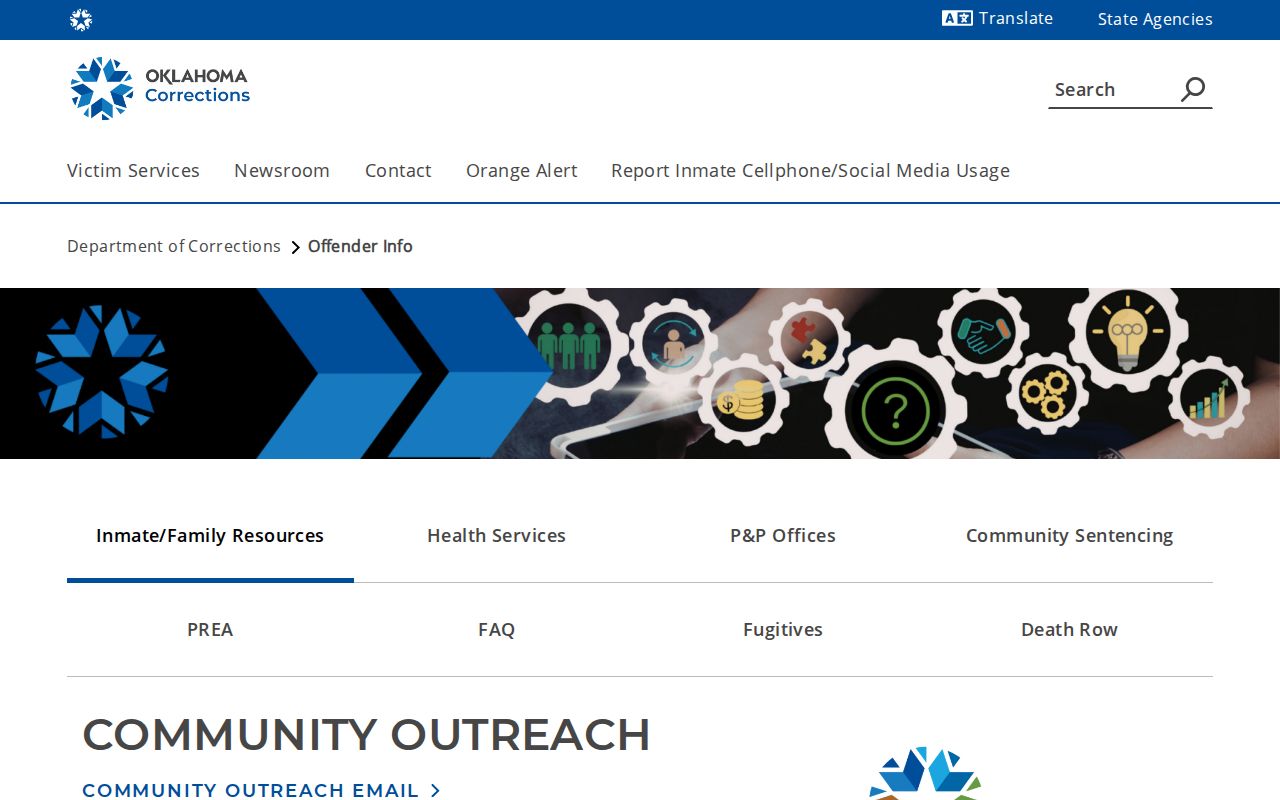
The screenshot supports the correct route: use public status for orientation, then direct an authorized exact-date question to the inmate, case manager, records officer, ODOC records, or Victim Services as appropriate.
LeFlore Release Date Computation
An ODOC sentence calculation begins with the judgment and sentence. Staff account for the reception date, applicable jail credit, concurrent or consecutive terms, the controlling sentence, and any statutory minimum. Concurrent sentences run at the same time, while consecutive sentences run one after another. A controlling sentence is the term that governs the current release calculation. ODOC then applies lawful credits and later adjustments.
Credits do not erase the need to read the whole record. A person may have more than one LeFlore County case, a sentence from another county, or a federal or immigration detainer. One completed term does not establish that all custody has ended. A detainer may leave the sentence end unchanged while changing the person's destination. Likewise, a favorable parole action may affect the release path but does not supply the gate date before ODOC completes its work.
County-only terms require a separate review. Do not apply the ODOC credit rule by rote to a local LeFlore County jail sentence. The court judgment, jail credit, and verified sheriff practice control that calculation. Bond, dismissal, time served, and transfer are legal or custody events, not projected release formulas. The county has not published a local online date calculator.
Note: The same sentence length can yield different timelines when credits, sentence structure, offense date, and other active terms differ.
LeFlore Earned-Time Release Rules
Title 57 §138 provides Oklahoma's earned-credit framework. Earned credits reduce time under the current statutory and agency rules. Classification, performance, achievements, and misconduct can affect the calculation. The law was amended in 2026, so an old chart should not be treated as current authority. ODOC's sentence staff apply the version and rules that govern the case.
For certain listed felonies, Title 21 §13.1 creates an 85 percent floor. It applies to covered crimes committed on or after March 1, 2000. A person subject to the statute must serve at least 85 percent of the imposed imprisonment, and parole or credits cannot reduce confinement below that floor. The exact offense list and the version in effect on the offense date matter.
Parole eligibility is governed separately by Title 57 §332.7. Eligibility means the case can be considered under the applicable rules. It does not mean parole will be granted or that a person will be released on the eligibility date. For LeFlore County state prisoners, the Board result, ODOC processing, and any detainers still need to be checked.
Why LeFlore Release Dates Change
A projected release is recalculated as the official inputs change. Some events alter the sentence computation. Others change the destination without changing the term's end. The distinction is vital when someone is expected to leave a LeFlore County or ODOC facility.
| Event | Possible effect | Record to check |
|---|---|---|
| Earned credits or achievement credits | May move the tentative calculation under current rules | ODOC sentence administration |
| Misconduct or credit-level change | May reduce credits or change days remaining | ODOC records officer or case manager |
| Amended judgment or sentence modification | Can change sentence terms or credit | Signed court order and updated custody record |
| Revocation or acceleration | Can return a supervised person to custody or alter the active term | Court and ODOC records |
| Parole decision | May create a route to conditional release after required processing | Board result, ODOC status, supervision office |
| Detainer or another sentence | May cause transfer or continued custody rather than community release | Movement record and receiving authority |
A court order can also authorize a county release while another hold prevents it. Conversely, the end of one sentence may be followed by another active term. Report only the narrow status shown by the source. “Projected,” “parole eligible,” “approved,” “transferred,” and “released” describe different steps.
LeFlore Release Systems Compared
Custody type determines where to ask. LeFlore County has an adult county detention center, a state prison, and a juvenile detention center. The adult jail may hold people before court, on a local sentence, or pending placement. The state prison holds ODOC prisoners. Juvenile information follows special access rules and should not be forced through adult searches.
| Situation | Date source | Main limit |
|---|---|---|
| Pretrial county detainee | Court order, bond record, and jail confirmation | No final sentence-based projected date |
| Local jail sentence | Judgment, jail credit, and detention-center record | ODOC credit rules should not be applied automatically |
| ODOC state prisoner | Sentence administration, case manager, records officer, and authorized ODOC channels | Exact date is generally confidential and tentative |
| Juvenile detainee | Authorized facility and juvenile-court channels | Title 10A confidentiality and court orders apply |
| Federal prisoner | BOP locator and federal court record | A BOP date covers BOP custody, not every other hold |
Leaving the county center can mean community release or transfer to ODOC, another jail, federal authorities, or immigration custody. Ask for the destination in the movement record. A transfer closes one location's custody without ending government custody as a whole.
Confirm LeFlore Actual Release
A projected date is most useful as a cue to monitor official status. Oklahoma VINE can provide custody notifications from participating reporting agencies, but availability and timing must be checked in the live system. ODOC Victim Services is a separate official channel. The two services should not be treated as the same registration.
For a specific person, the LeFlore County VINELink inmate search explains how to select Oklahoma, match the individual, and register for an alert. A VINE notice reflects the status supplied by the reporting agency and can lag. Confirm the event with the detention center, ODOC, court, or other source that holds the underlying record.
Once release occurs, ask for the actual release or movement entry. It should distinguish community release, parole, full discharge, and transfer where the agency maintains those fields. If another authority received the person, follow that system. The final record trail should show who held custody, what event ended or moved that custody, when the event was recorded, and where the person went next.
Note: Alerts help track change, but the responsible agency's release or movement record remains the proof of the completed event.