
LeFlore VINELink Search Coverage
Oklahoma VINE through VINELink provides custody status and notifications from agencies that take part in the network. Oklahoma corrections information may appear, and a county jail record may appear when the relevant agency participates and sends that data. The live Oklahoma selector and the reporting agency shown on the individual result are the checks that matter. The research did not establish universal participation by every LeFlore County or Oklahoma municipal agency.
VINELink is useful for a named person, not for a broad list of everyone recently released. The official LeFlore County sheriff site has no live roster or recent-release feed. If VINELink shows a matching county record, it can supply a reported custody event or alert. The LeFlore County Detention Center still holds the underlying booking and release record. If the person is or was an ODOC state prisoner, the ODOC profile and records channels add sentence and supervision context.
| Custody system | Use of VINELink | Needed confirmation |
|---|---|---|
| LeFlore county custody | Search only if the live Oklahoma system shows the reporting agency and person | Detention-center release or movement record |
| ODOC state custody | Use the available Oklahoma record and alerts, then compare ODOC status | ODOC record, facility, or Victim Services |
| Federal custody | Not a BOP historical locator | BOP locator and federal court record |
| Immigration custody | Not an ICE custody locator | ICE Online Detainee Locator and responsible office |
| Juvenile custody | Do not assume a public adult result should exist | Authorized facility or juvenile-court channel |
Note: Participation and reporting source must be checked in the live Oklahoma system before a missing result is interpreted.
Search LeFlore Inmates on VINELink
Start with identifying facts. A common name can return several people, and a wrong match can create a false release claim. Use a full name plus an offender ID, age, date of birth, location, or another identifier displayed by the live system. The interface changes, so follow its current labels rather than relying on a saved screen.
- Open VINELink and choose Oklahoma from the state selection screen.
- Select the offender-search function shown in the live interface.
- Enter the full or partial name or offender ID supported by the form.
- Narrow the results with displayed age, birth information, location, or other identifiers. Never rely on a name alone.
- Open the one matching record and note the custody status, location, and reporting agency.
- If the result says released or out of custody, record what that source transmitted and confirm the event with the responsible agency.
The official Oklahoma selection and search screen is shown in the manifest capture below. Open the current VINELink state selector for the live form and available choices.
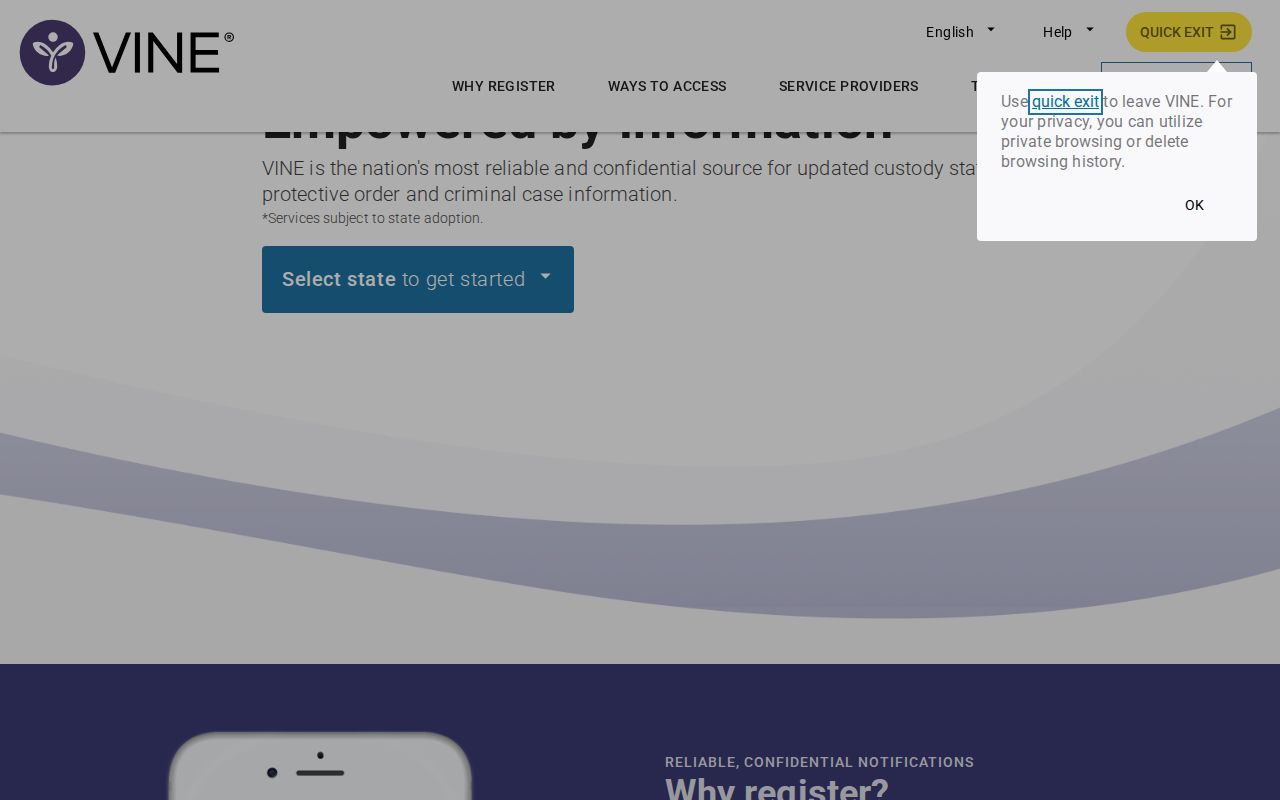
The image helps identify the official service, while the live person record identifies the agency whose status must be verified.
LeFlore VINELink Release Fields
A VINELink result should be read as a report from the named source. Available fields can vary. The research supports checking the individual record for custody status and reporting agency or location, then using any displayed identifiers to avoid a name-only match. Do not claim a field exists when the live Oklahoma record does not show it.
| Field | What it helps establish | Limit |
|---|---|---|
| Name and identifiers | Whether the result is likely the intended person | A name alone is not enough |
| Custody status | The status last supplied by the reporting source | May lag and does not clear every other hold |
| Reporting agency | Which agency should confirm the event | Participation can differ among agencies |
| Facility or location | Where the source associates the person with custody | A transfer may update later than the move |
| Released or out-of-custody event | That the source transmitted a change from custody | Not a certified release timestamp or disposition |
| Notification choices | Which alert methods the current record offers | Methods and labels can change |
A release record answers more. It may show the actual time, release reason, authority, holds, and destination when transferred. A VINE event should lead to that record rather than replace it. For a county event, use the detention center or written sheriff request. For a state event, use ODOC records and the facility.
Register LeFlore Release Notifications
Registration begins from the correct individual record. Available methods may include phone, text, email, or an app, but the live screen controls what can be selected. Enter contact details with care. Telephone registration commonly asks the user to create a PIN. That PIN acknowledges receipt and stops repeated calls, so it should be stored where the registrant can retrieve it.
- Open the verified person record and choose the notification or registration option offered there.
- Select one of the phone, text, email, or app methods actually shown.
- Enter the contact information accurately and review it before continuing.
- For a phone alert, create and retain the requested PIN for acknowledgment.
- Complete any email or text confirmation that the service sends.
- Keep the registration details, but confirm an urgent custody change directly with the reporting agency.
More than one method can be useful when the live service allows it. Still, no delivery channel should be treated as fail-safe. A phone can block a call, an inbox can filter a message, and source data can arrive late. Independent agency confirmation remains part of the process.
Note: Keep the phone PIN private and available; it is used to acknowledge an alert and stop repeat calls.
Confirm LeFlore VINELink Release Results
“Released” or “out of custody” means the reporting source sent that status. It does not prove why the person left, the precise time recorded in the jail system, or freedom from every authority. A LeFlore County detainee may have posted bond, completed time, received a court order, or been transferred. A state prisoner may have entered parole supervision or fully discharged. Those outcomes require different records.
For county custody, call the LeFlore County Detention Center and request the booking or release sheet in writing through the sheriff's process. Ask for the actual date and time, disposition, release authority, and receiving agency when transferred. Check OSCN for the court action, but remember that an order and physical release are separate. Another hold may prevent community exit after bond or a release order.
For ODOC custody, compare the Offender Lookup profile and contact the relevant facility or records channel. Parole means conditional release under supervision. Discharge means the identified sentence has ended. A profile can list several sentences, so one discharged term is not proof that every term is complete.
Missing LeFlore VINELink Results
No result is not proof of release. The name may be spelled differently, the ID may be wrong, the agency may not participate, or the source update may be delayed. A transfer can move the person to a new reporting system. Sealed, protected, or juvenile information may also be absent from public view. Try another supported identifier and check the last known agency.
The fallback depends on custody. For the LeFlore County Detention Center, use the detention-center line and sheriff written request. For an ODOC case, search by DOC number and ask the facility or state records office. For a local court action, use OSCN or ODCR and obtain the signed order from the Court Clerk. A federal case belongs in the BOP locator or federal docket. Current immigration detention belongs in ICE's locator.
The complete LeFlore County released inmate search path organizes those source-specific checks when a VINE result is missing or unclear.
LeFlore Post-Custody Registration Layer
LeFlore County has a separate local layer for people who have a legal sex-offender registration duty. The sheriff's official registration page directs public searches to the ODOC Sex Offender Registry. It lists local registration windows from 8:00 to 11:30 a.m. and 1:00 to 4:15 p.m., Monday through Friday, at 100 S. Church Street in Poteau, with 918-647-3426 as the phone number.
This is not a broad post-release search. Registry coverage applies only to people with the statutory duty. A registry detail may show a photograph, aliases, physical description, offense, address or location, reporting agency, status, and verification dates when displayed. None of those fields supplies the precise jail release event. Absence from the registry proves neither release nor the lack of a past case.
The source pages show different ZIP codes for the registration and general sheriff address. Verify the correct mailing ZIP before sending anything. For a registry error, use the correction or contact path tied to that official registry. Do not use VINELink registration and offender registration as if they were the same process.
Note: Local offender registration may confirm a legal post-custody duty, but it cannot establish a person's release date.
LeFlore Notification Channels Compared
ODOC Victim Services is separate from VINELink. The state office lists 405-425-2607 and victim.services@doc.ok.gov for its work. The Oklahoma Pardon and Parole Board also maintains victim-services information. These channels can be relevant to state prison and parole events, while VINELink registration is made through the individual record and offered delivery options.
Choose the channel that holds the event. A county booking/release record belongs to the LeFlore County detention system. An ODOC sentence, movement, parole implementation, or discharge belongs to ODOC. A Board docket or result shows parole consideration and decision stages, not the moment a person exits. Federal and immigration systems remain outside VINE's role.
A sound check creates a short source trail: the correct person, the reporting agency, the status or alert, and direct confirmation from the record holder. Save the event details needed for that confirmation, but avoid turning an unverified alert into a wider claim. The custody source can explain whether the event was release to the community, parole, full discharge, or a transfer to another authority.