
LeFlore Parole and Probation Compared
Oklahoma splits the work between two state bodies. The Oklahoma Pardon and Parole Board considers parole matters. The Oklahoma Department of Corrections, known as ODOC, supervises both parolees and people placed on DOC probation. Parole is conditional release from a prison sentence. Probation is a court-ordered term in the community and may follow no prison stay. Neither status means the full sentence has ended.
The distinction matters in LeFlore County. A person leaving Jim E. Hamilton Correctional Center on parole remains under ODOC control in the community. Someone sentenced to probation by the LeFlore County District Court may enter supervision without ever becoming a state prisoner. A person who is discharged has completed the obligation shown for that sentence. One profile may contain several cases, however, so a discharge on one term does not prove that all custody or supervision has ended.
| Point | Parole | Probation |
|---|---|---|
| How it begins | Conditional release from an imprisonment term after required action and processing | Court sentence or order allowing supervision in the community |
| Prior prison stay | Yes, as part of the sentence being paroled | Not required |
| Decision source | Pardon and Parole Board, plus any other approval required by the case | Sentencing court |
| Supervising body | ODOC | ODOC when it is a DOC-supervised probation term |
| End point | Discharge or another lawful end shown in the sentence record | Completion, discharge, modification, revocation, or another court action |
- Parole
- Conditional community release before the sentence is fully discharged.
- Probation
- Court-ordered community supervision that may be imposed without prison.
- Discharge
- Completion of the obligation on the sentence identified in the record.
- Detainer
- A request or hold that may send a person to another authority instead of the community.
Verify LeFlore Post-Release Supervision
No separate statewide public probation-and-parole-only search was verified in the research. The public route begins with the ODOC Offender Lookup. It can show an abbreviated status, DOC number, offense or sentence entries, and facility or supervision information when available. It does not cover every person who left the LeFlore County Detention Center. A county bond release, dismissal, or time-served disposition may never create an ODOC record.
A name alone is not enough. Compare a DOC number, birth information, court case, or another sound identifier before relying on a result. Then ask the Poteau office whether the public record identifies active supervision, discharge, an assigned office, or another status it can lawfully confirm. Case-management notes and personal details may remain confidential. For the underlying court judgment, use OSCN and obtain the signed order from the LeFlore County Court Clerk when the docket text is brief.
- Search ODOC by the person's full name or known DOC number, then open only the result whose identifiers match.
- Read each listed case and sentence. Note whether the profile shows incarceration, supervision, parole, probation, discharge, or fugitive information.
- Check the LeFlore court docket when probation, revocation, acceleration, or completion arose from a local judgment.
- Contact the Poteau Probation and Parole Office for lawful confirmation of office routing or public supervision status.
- If parole consideration is involved, check the Board docket and validated result, then return to ODOC for implementation status.
The broader LeFlore County released inmate search and records path explains what to use when the person left county custody rather than ODOC custody.
Note: An abbreviated ODOC result is a starting point; the sentence record, court order, and supervising office provide needed context.
LeFlore Probation Office Verification
LeFlore County has a named local route for supervision questions. ODOC's official directory lists the Poteau Probation and Parole Office. Use it first for local routing. The same directory also identifies McAlester sub-office coverage that includes LeFlore County, but the Poteau listing is the direct county contact. The directory does not publish general office hours in the research, so do not assume a walk-in time.
Poteau Probation and Parole Office106 Rogers Avenue
Poteau, OK 74953
918-564-6009
Hours: not published
The ODOC probation and parole directory is the source to recheck before visiting or calling. Ask a narrow question. A useful request is whether the public record shows an active term, a discharge, an assigned office, or a status that requires another official channel. Do not ask the office to infer release from a missing jail listing. LeFlore County's sheriff site has no public jail roster, and the local office handles community supervision rather than county booking records.
The official office screenshot below shows the state directory used to route LeFlore County supervision questions. Review the current ODOC office listing before relying on saved contact details.
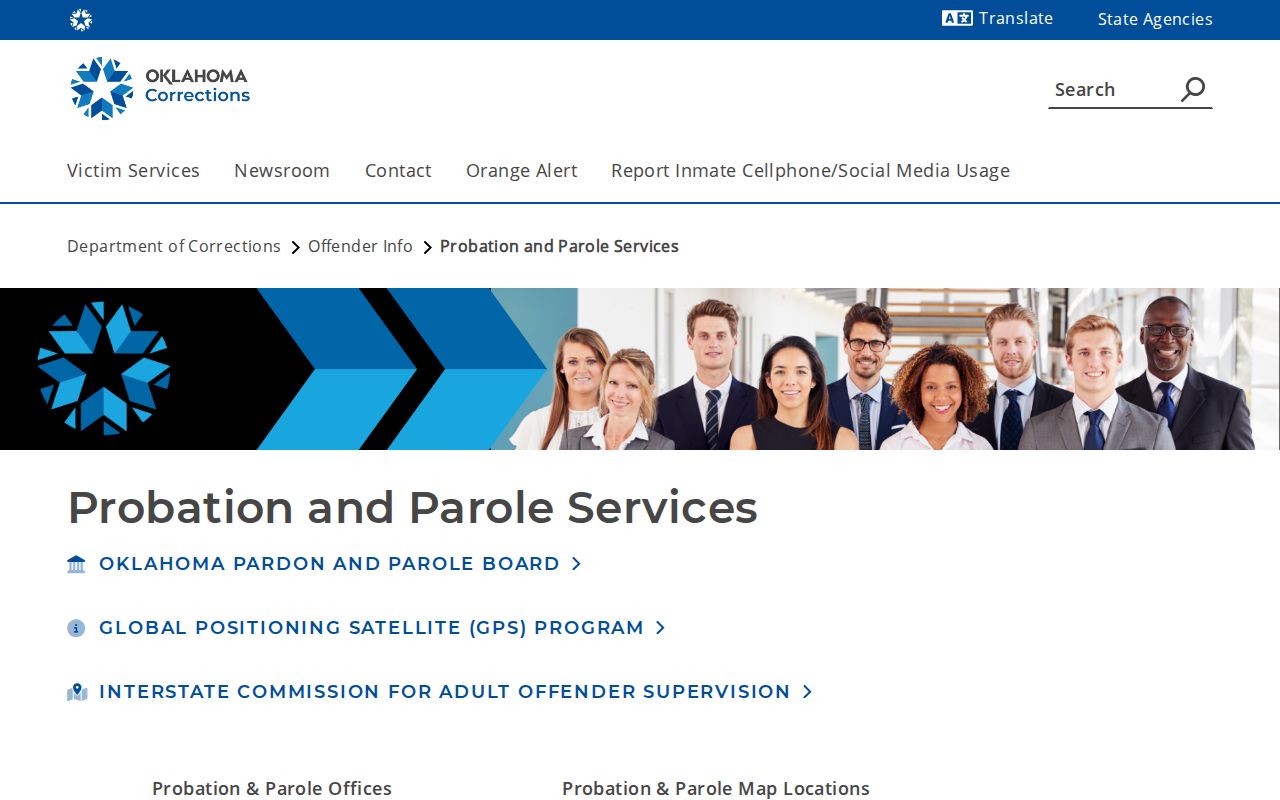
The Poteau entry ties a state supervision record to a local verification point without turning a county jail release into an ODOC case.
LeFlore Parole Hearing Records
Parole eligibility is not a release date. The Board publishes meeting information, monthly dockets, a searchable docket archive, and validated results. Under its Title 515 rules, a regular monthly docket is posted at least 20 days before the meeting, while a supplemental docket is posted at least 10 days before. A docket appearance establishes that a matter is scheduled for consideration. It does not show that the person has walked out of a facility.
The Board process can result in a recommendation for a violent offense, a grant for a nonviolent offense, a pass to another docket, or a denial. Three affirmative votes are required. Votes are not final until the meeting adjourns and results are validated. Even a favorable outcome may still require further approval, ODOC release processing, and the clearing of detainers. The parole docket search and validated results archive should therefore be read with the ODOC status.
Title 57 §332.7 controls parole eligibility through rules that depend on the offense and date. Title 21 §13.1 imposes an 85 percent floor for listed crimes committed on or after March 1, 2000. A simple one-third or 85 percent summary cannot replace the statute and sentence record. If a date is the real question, the LeFlore County projected release explanation separates eligibility, tentative calculations, and actual release.
Note: The Board says validated results are posted online; a vote still requires an ODOC status check before release is claimed.
LeFlore Probation Absconder Checks
ODOC maintains a separate official Fugitives search for fugitive or absconder records. An absconder is a person alleged to have stopped reporting or otherwise left supervision without authorization. A listed result can signal active retake or warrant authority. It must not be described as proof of a valid discharge or an ordinary release.
This state channel is especially important because the LeFlore County Sheriff's Most Wanted page was blank during the research review. A blank local page does not clear a state status. Search the ODOC record, match identifiers, and confirm the entry with the Poteau office. If a court revocation or acceleration is involved, the LeFlore court docket may show the legal action, but the signed order is stronger evidence than a short index entry.
The official ODOC search image is linked from the current fugitives portal. It illustrates the separate state route used for this LeFlore County parole and probation question.
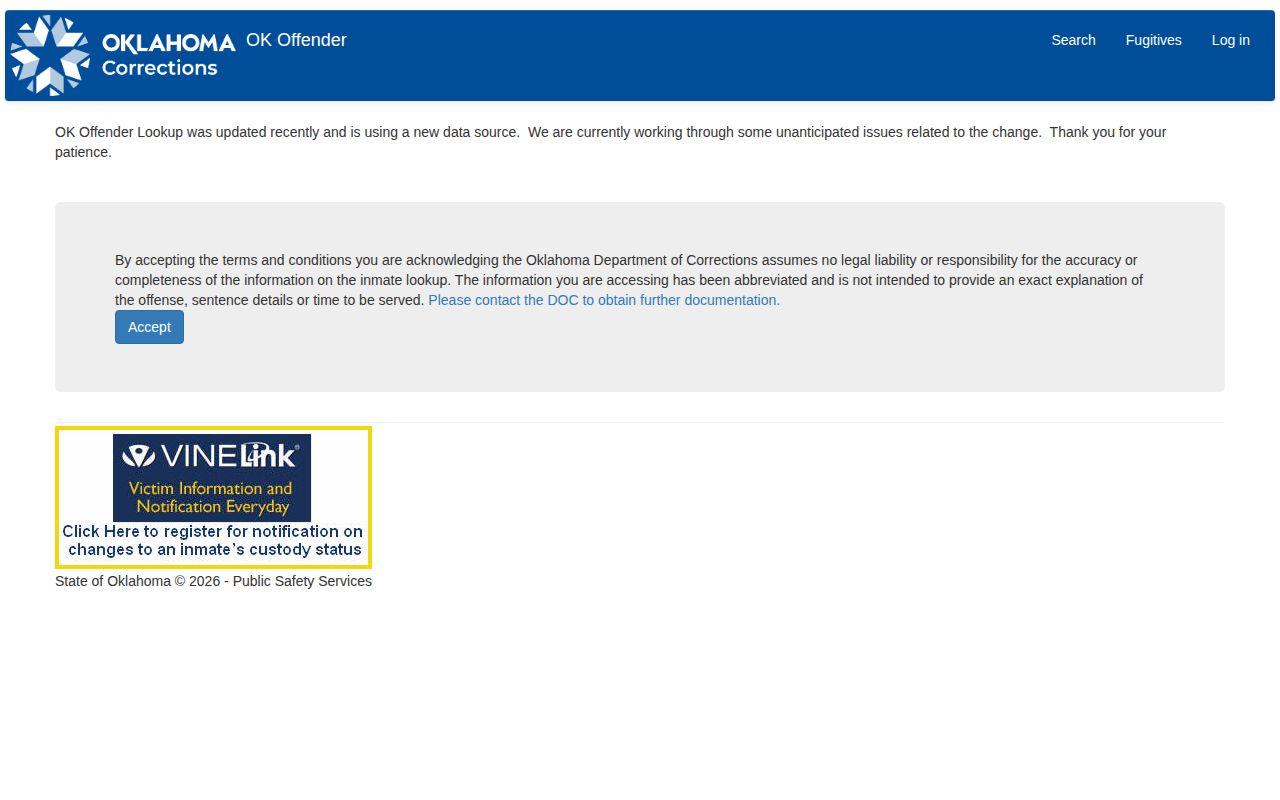
Because the search is status-specific, it should be checked in addition to the ordinary offender profile when absconder or warrant information is at issue.
LeFlore Post-Release Support Course
LeFlore County Bridges Out of Poverty offers a local Getting Ahead course in Poteau. The program runs for 20 weeks, meets on Tuesdays from 5:30 to 8:30, and uses an application and interview. It is a broad course on stability and local navigation. It is not a corrections agency, parole program, or proof that someone is meeting an ODOC condition.
That distinction keeps the referral useful. A person on LeFlore County probation or parole should confirm required programs and reporting rules with the assigned officer. The local course may be a separate source of support, but participation does not change a sentence, satisfy a detainer, or establish discharge unless the responsible authority has said so in the individual's case. Official supervision terms remain in the court and ODOC records.
Note: Community support and state supervision serve different roles; only the court or ODOC can define a person's required conditions.
LeFlore Supervision Changes and Holds
Conditions are the rules attached to parole or probation. They can include reporting and other case-specific duties, but the research does not provide a universal LeFlore County list. A violation allegation may lead to a warrant, retake action, revocation, or another formal process. Revocation means the authority withdraws community supervision and may return the person to custody under the governing order. The result must be read from the official case and supervision record.
A detainer creates another source of confusion. A person approved for parole may move from ODOC to another county, a federal authority, the U.S. Marshals Service, or immigration custody. That is a transfer, not a return to the community. Check the receiving authority named in the movement record. VINE may report a custody event, but its data can lag and participating-agency coverage varies. The reporting agency remains the source for a certified event.
LeFlore Parole Discharge Records
Supervision ends through an official act, not through the passage of an assumed date. ODOC's parole glossary treats a full discharge as completion of the sentence with no remaining obligation on that sentence. Probation may end through completion or discharge, while later court actions can modify, accelerate, or revoke it. Since one person can have several cases, read every active term before drawing a conclusion.
For a clear record trail, retain the matching ODOC profile, the court judgment or completion order, and any releasable discharge document. ODOC Legal Services lists a Closed Records channel and a discharge-only email for formal requests. Authorization and closed-record rules may apply. An online status may be abbreviated, so ask for the existing discharge certificate or order when that exact document matters.
The best LeFlore County conclusion is narrow: identify the sentence, identify the supervising body, and report the status the source actually shows. Parole, probation, discharge, transfer, and absconder status are not interchangeable. That care prevents a favorable hearing result, a missing name, or the end of one term from being mistaken for the end of all legal custody.